
Maintenance that pays for itself
Sealcoating & Crack Filling in Rochester Hills, MI
Fill the cracks, then seal the surface. In that order, every few years.
- No-cost estimates at your property
- Itemized written quote: base, thickness, approach
- Approach work planned to the city's own spec
Two Steps That Belong Together
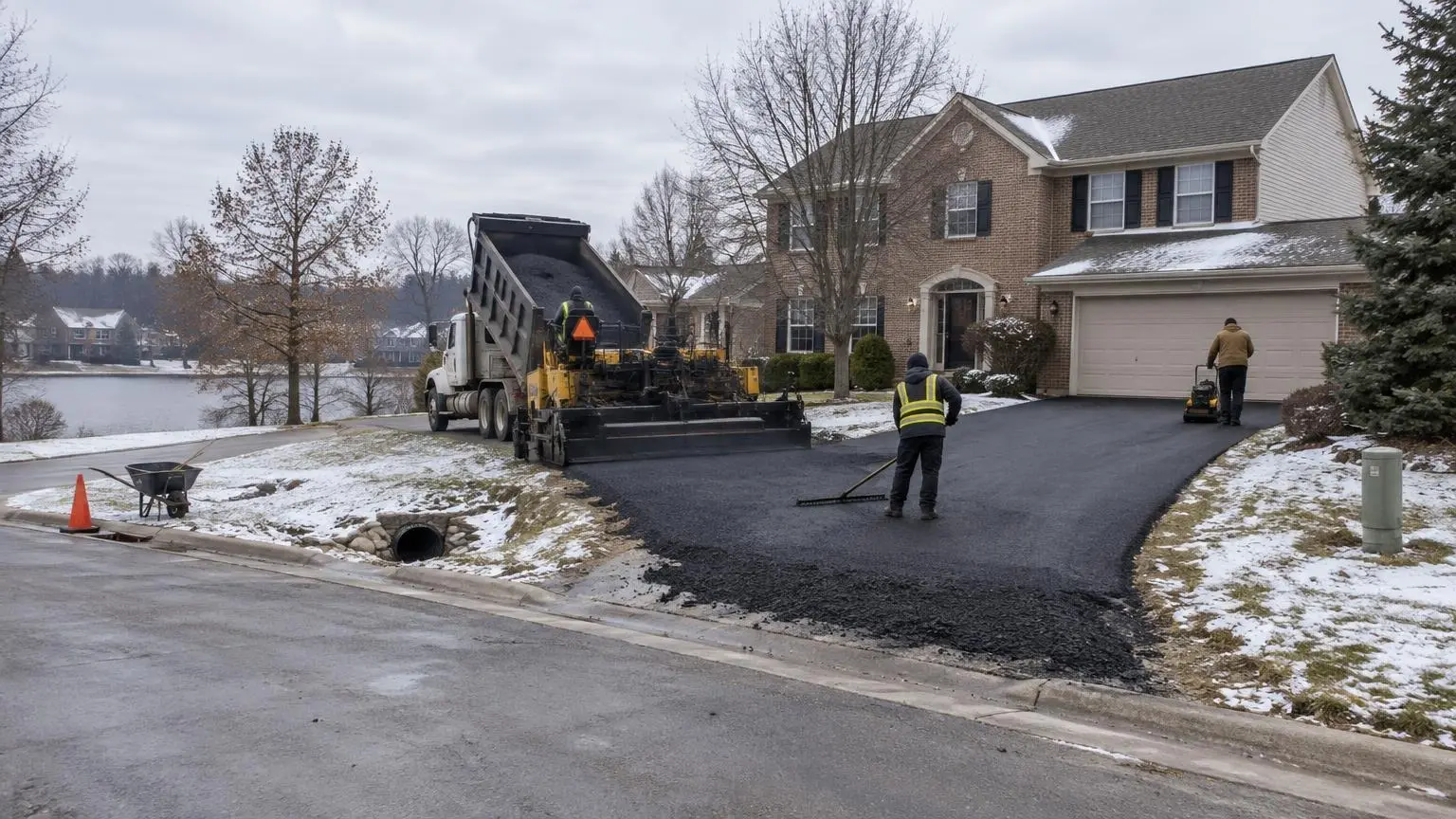
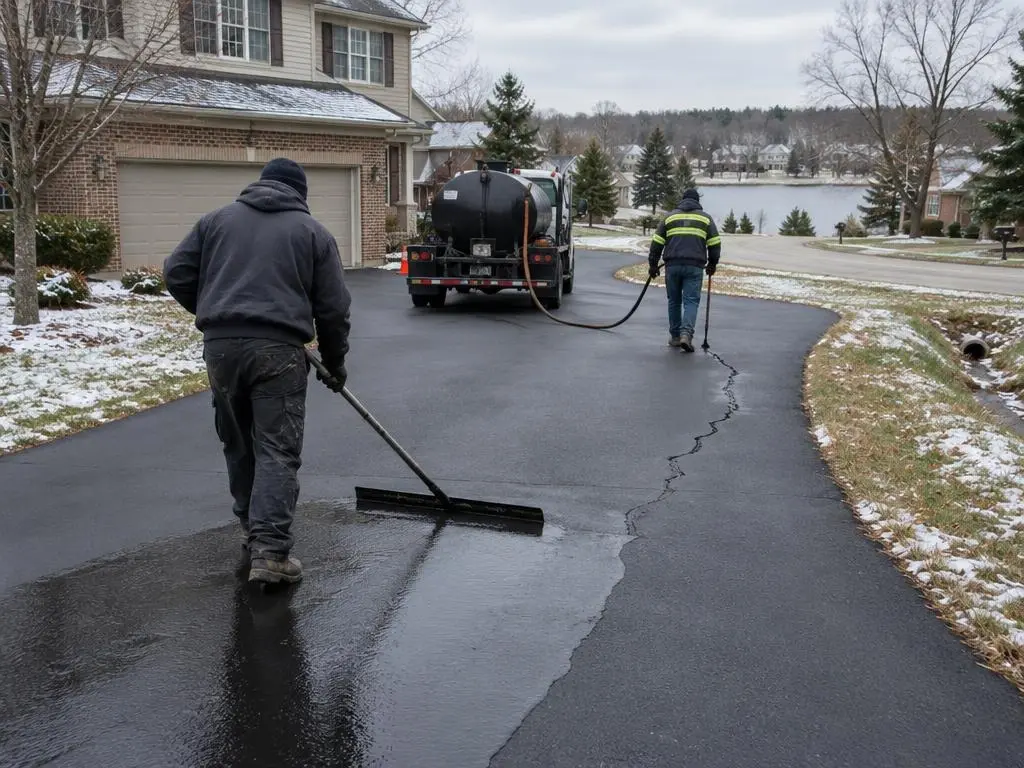
Sealcoating and crack filling protect asphalt in different ways, and they work best done together. Crack filling closes the openings that let meltwater reach the base. Sealcoating puts a thin protective layer over the whole surface to slow the drying and graying that loosen the stone over time. Seal over open cracks and water still gets in. Fill cracks but skip the seal and the surface keeps weathering. In southeast Michigan, with roughly 120 freezing days a year, both matter.
Crack filling vs. crack sealing
HomeGuide separates the two: basic crack filling lasts about 1 to 2 years, while crack sealing with flexible, rubberized material lasts about 3 to 8 years because it stretches as the pavement moves with temperature. For working cracks that open in winter and close in summer, a flexible hot-pour sealant is the better choice. Wide cracks, broken edges and webs of alligator cracking are past filling and need patching.
When to sealcoat
HomeGuide recommends waiting 3 to 6 months after paving before the first seal, and resealing every 2 to 10 years depending on product and exposure. Signs it is due: a gray, faded surface, water soaking in instead of beading, and loose sand in the tire paths. Sealer needs dry pavement and temperatures between about 50 and 95 degrees, and HomeGuide lists 12 to 72 hours before driving.
Our sequence
- Clean the surface and edges with blowers and brooms
- Treat oil and fluid stains so sealer bonds
- Clean and fill or seal cracks
- Hand-edge borders along the garage, walks and lawn
- Apply an even coat across the drive
- Block the entrance until it has cured
Choosing a sealer
HomeGuide notes that coal tar sealers resist oil and gas stains but have been banned or restricted in many areas over health and environmental concerns, while asphalt-based emulsions are seen as more environmentally friendly but stain more easily. We explain what we use and why at the estimate.
Lots
For parking lots, HomeAdvisor lists sealcoating at about $0.15 to $0.30 per square foot. Lots are sealed in sections or after hours, and striping goes down once the sealer cures.
Why the order matters
Sealcoat goes on as a thin liquid and dries to a film. It can bridge a hairline crack, but it cannot fill one. Water still gets under the film through any open crack, freezes and pops the coating off around it within a winter or two. That is why crack work always comes first, and why we look at the cracks before quoting the seal.
A simple maintenance calendar
- Every fall: walk the drive, fill or seal new cracks
- Every few years: sealcoat after cleaning and crack work
- As needed: patch any spot that has broken through to the base
- Every winter: keep the edges clear and avoid metal blades on the surface where possible
What Is Included
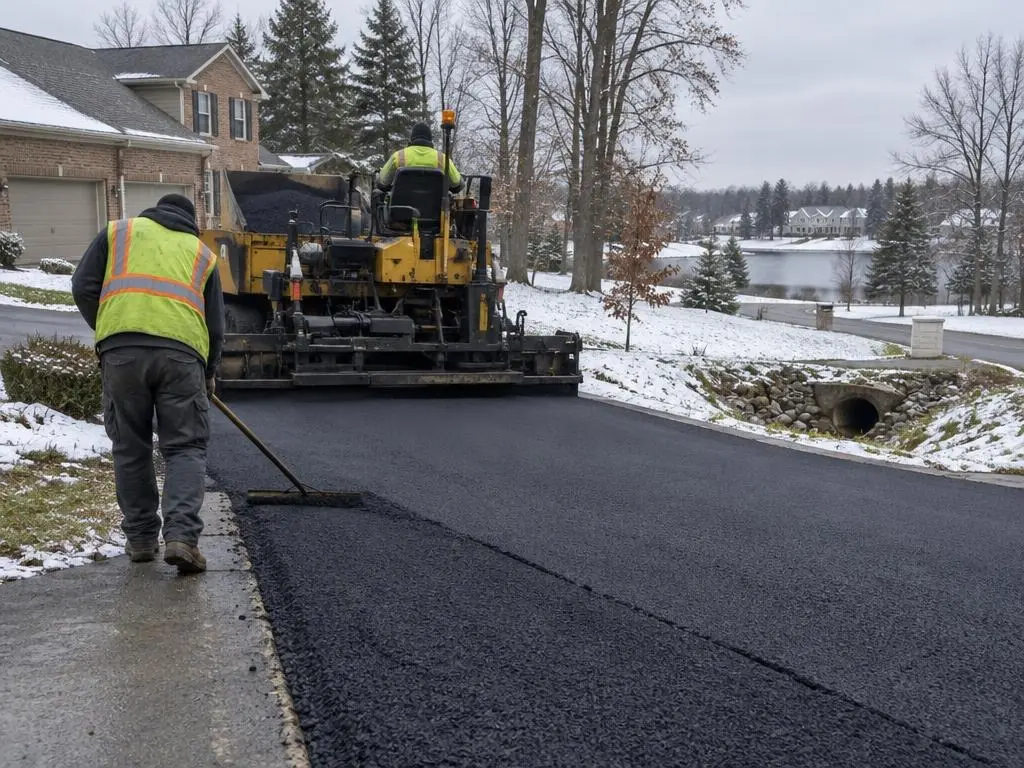
Most of the value is in the preparation.
Cleaning and edging
Debris, sand and grass along the edges removed.
Oil spot priming
Stains treated so the sealer bonds.
Crack filling or sealing
Cracks cleaned and filled with the right material for their size.
Sealcoat application
Even coat applied, borders hand-cut, entrance blocked to cure.
Sealing and Crack Repair Cost Ranges
| Item | National range |
|---|---|
| Driveway sealcoating (HomeGuide) | $1 to $2 per sq ft |
| 400 sq ft driveway (HomeGuide) | $400 to $800 |
| 864 sq ft, three-car driveway (HomeGuide) | $860 to $1,700 |
| Average sealing job (HomeGuide) | About $600 |
| Crack filling or sealing (HomeGuide) | $0.50 to $3 per linear ft |
| Parking lot sealcoating (HomeAdvisor) | $0.15 to $0.30 per sq ft |
National figures. Crack footage, oil stains and minimum charges affect the total. Your written quote is the price.
The Process
1. Look and measure
Surface, cracks and stains checked; area and crack footage measured.
2. Pick a dry day
Booked for weather between about 50 and 95 degrees with no rain.
3. Prep and fill
Clean, prime stains, fill cracks.
4. Seal and cure
Coat applied, drive closed off, time to reopen given.
Sealcoating & Crack Filling Questions
How often should I sealcoat?
Every few years is typical. HomeGuide gives a range of 2 to 10 years depending on sealer and exposure.
Can you sealcoat in October?
On warm, dry days, yes. Once days stay below about 50 degrees, sealer will not cure well and it is better to wait for spring.
Do I need to fill cracks before sealing?
Yes. Sealer is too thin to keep water out of an open crack.
How long until I can drive on it?
Expect 12 to 72 hours according to HomeGuide; warm, dry, sunny days cure fastest.
Sealcoating & Crack Filling Service Areas
- Asphalt Paving in Rochester Hills, MI
- Asphalt Paving in Rochester, MI
- Asphalt Paving in Oakland Township, MI
- Asphalt Paving in Auburn Hills, MI
- Asphalt Paving in Troy, MI
- Asphalt Paving in Shelby Township, MI
- Asphalt Paving in Utica, MI
- Asphalt Paving in Sterling Heights, MI
- Asphalt Paving in Lake Orion, MI
- Asphalt Paving in Orion Township, MI
- Asphalt Paving in Bloomfield Hills, MI
- Asphalt Paving in Bloomfield Township, MI
- Asphalt Paving in Washington Township, MI
- Asphalt Paving in Macomb Township, MI
- Asphalt Paving in Oxford, MI
- Asphalt Paving in Clarkston, MI
- Asphalt Paving in Waterford, MI
- Asphalt Paving in Pontiac, MI
- Asphalt Paving in Birmingham, MI
- Asphalt Paving in Royal Oak, MI
- Asphalt Paving in Clawson, MI
- Asphalt Paving in Romeo, MI
Get a Sealcoating & Crack Filling Estimate
Book sealcoating and crack filling in Rochester Hills.